Research

Free-Flow / Porous Media Coupled Systems

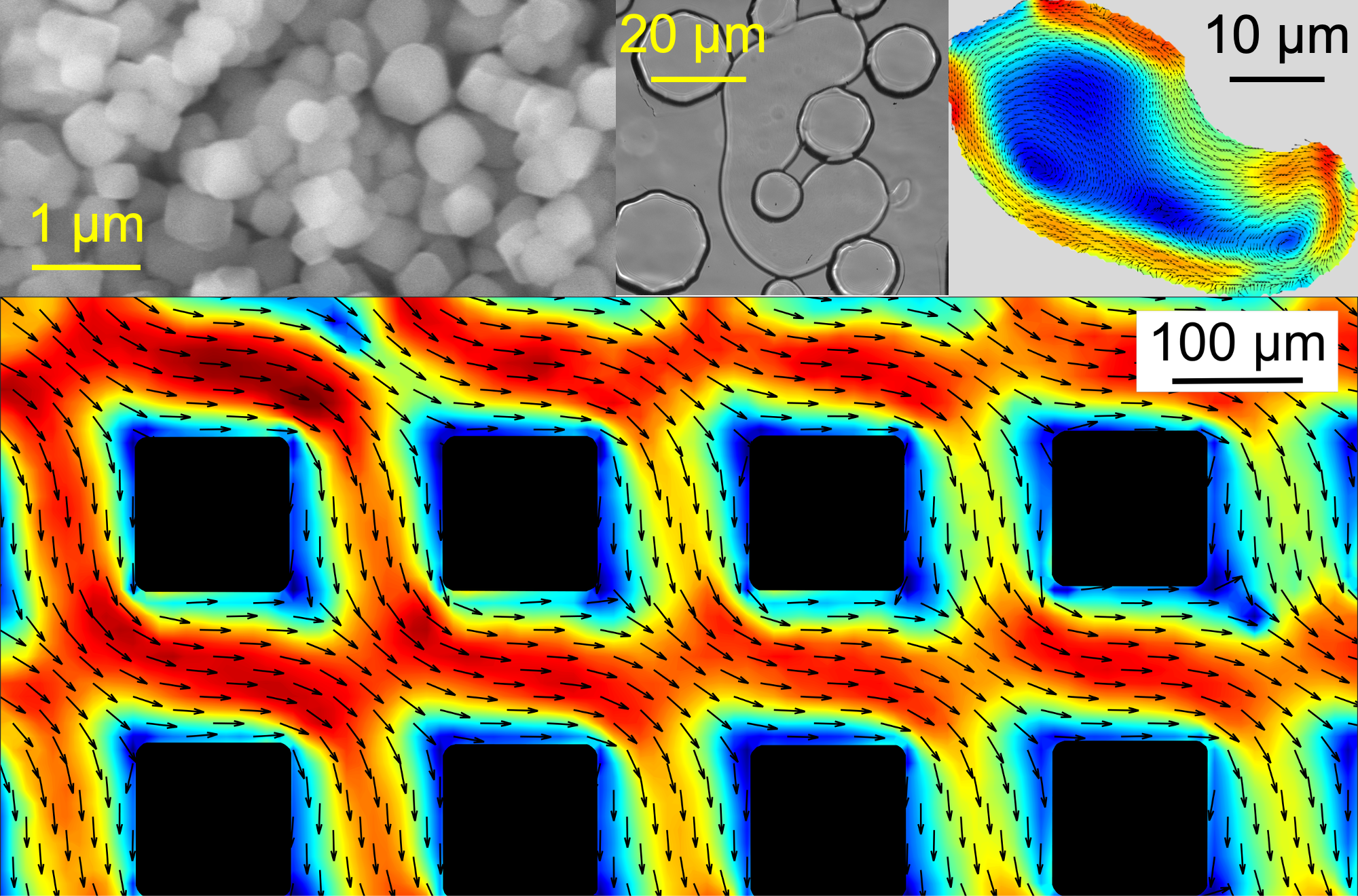
We investigate momentum transport and boundary-layer development at the interface between free-flow regions and porous materials using high-resolution microfluidic experiments. Our work combines Hele–Shaw micromodels, micro-PIV velocimetry, and analytical Darcy–Brinkman modeling to reveal how permeability, porosity, and interfacial geometry govern slip velocity, channeling, and transport across scales. These studies provide experimentally validated frameworks for coupled free-flow/porous-media systems relevant to microfluidics, energy systems, transpiration cooling, filtration, and transport in engineered porous structures. Recent results demonstrated permeability-dependent boundary-layer formation, experimentally validated viscosity-invariant slip length behavior, and exact analytical solutions for laminar flow near permeable interfaces.

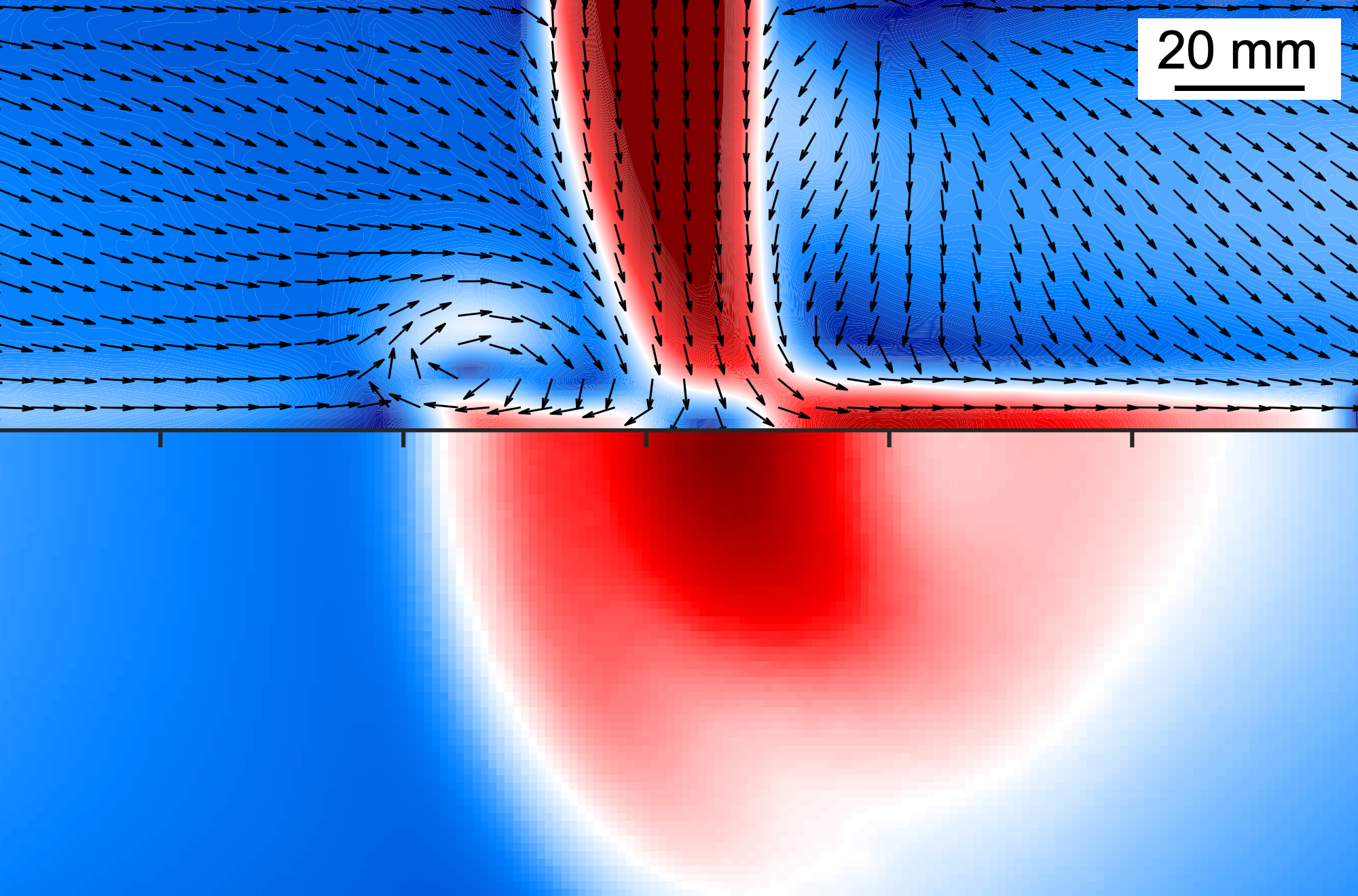
Micro-PIV measurements and analytical modeling of flow near a permeable lateral wall demonstrate permeability-controlled boundary-layer formation and viscosity-invariant slip-length behavior in coupled free-flow/porous-media systems.

Del Mastro, M. and Terzis, A. On the exact solutions of Darcy–Brinkman model in rectangular Hele–Shaw channels under no-slip and slip boundary conditions. Phys. Fluids 37, 032005 (2025).
Del Mastro, M., Kabour, R. and Terzis, A. Experimental validation of viscosity-invariant slip length at fluid–porous interfaces using water and oleic acid. Phys. Fluids 37, 082140 (2025).
Del Mastro, M. and Terzis, A. An experimental investigation of boundary layer over permeable interfaces in Hele-Shaw micromodels. Phys. Fluids 36, 112110 (2024).

Microfluidic Planar Sprays for Thermal Management in Confined Spaces

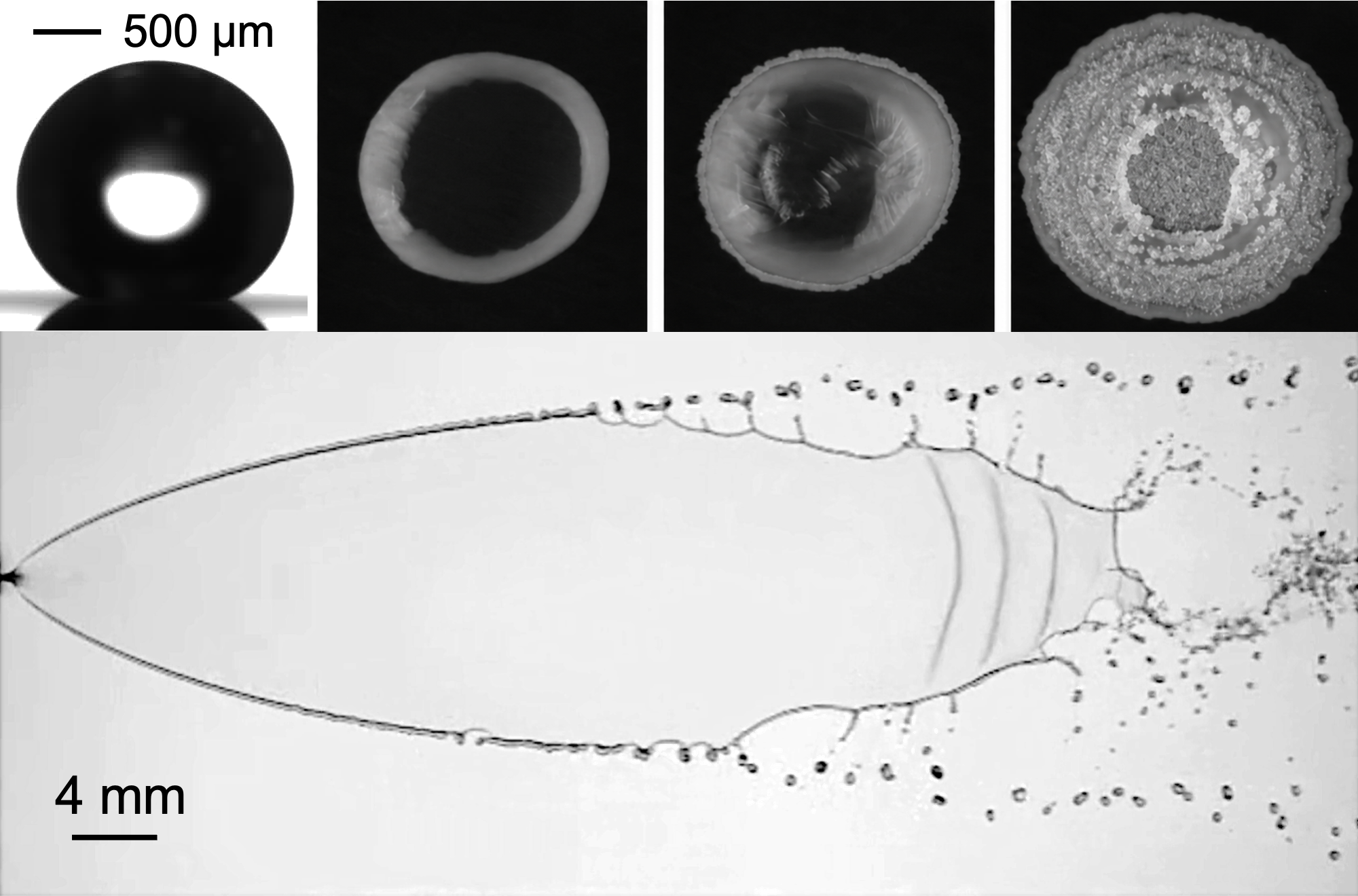
Microfluidic convergent nozzles enable the generation of ultra-thin planar liquid sheets that subsequently atomize into highly controllable sprays, offering a compact and efficient approach for thermal management in confined spaces. By tailoring nozzle geometry and operating conditions, the morphology, breakup dynamics, droplet-size distribution, and cooling footprint of the spray can be precisely controlled. These planar sheet sprays provide localized high heat-flux cooling while occupying significantly smaller volumes than conventional spray systems, making them attractive for electronics cooling, aerospace thermal management, and advanced energy technologies.

Our research combines high-speed imaging, laser-based spray diagnostics, and infrared thermal imaging to investigate the coupled fluid-dynamic and heat-transfer mechanisms governing sheet formation, atomization, and spray impingement cooling. Through experimentally validated scaling frameworks, we aim to establish predictive design methodologies for next-generation compact spray-cooling systems.

Microfluidic convergent nozzles generate ultra-thin liquid sheets that atomize into compact sprays for localized high heat-flux cooling. Experiments combining high-speed imaging, laser-diffraction spray diagnostics, infrared thermography, and inverse heat-conduction modeling reveal the coupled physics of sheet formation, breakup, atomization, and spray heat transfer.

Peteinaris, A., Touitou, C. and Terzis, A. A spatially resolved method for measuring heat transfer coefficients of water-sheet sprays at sub-saturation wall temperatures. Exp. Therm. Fluid Sci. Accepted (2026)
Peteinaris, A. and Terzis, A. Water-sheet atomization and spray characterization from convergent nozzles. Phys. Fluids 37, 122122 (2025).
Peteinaris, A., Sinha, P., Schmid, J. and Terzis, A. Morphology and dynamics scaling of water sheet jets generated by microfluidic convergent nozzles. Exp. Therm. Fluid Sci. 166, 111480 (2025).